

When people begin considering quartz kitchen countertops in Saluda, SC, the discussion often revolves around aesthetics, durability, and maintenance. Quartz has gained significant popularity in recent years, especially for kitchen renovations, due to its clean, modern look and the promise of minimal upkeep. But while quartz is a beautiful and functional material, many homeowners aren’t fully aware of its environmental impact. At Anderson Granite & Marble Shop of Greenwood, based in Greenwood, SC and serving the Saluda, SC area, we frequently guide homeowners through material decisions. While quartz kitchen countertops are indeed an excellent choice for many reasons, it’s essential to look beyond the surface and understand the environmental effects of choosing this material.
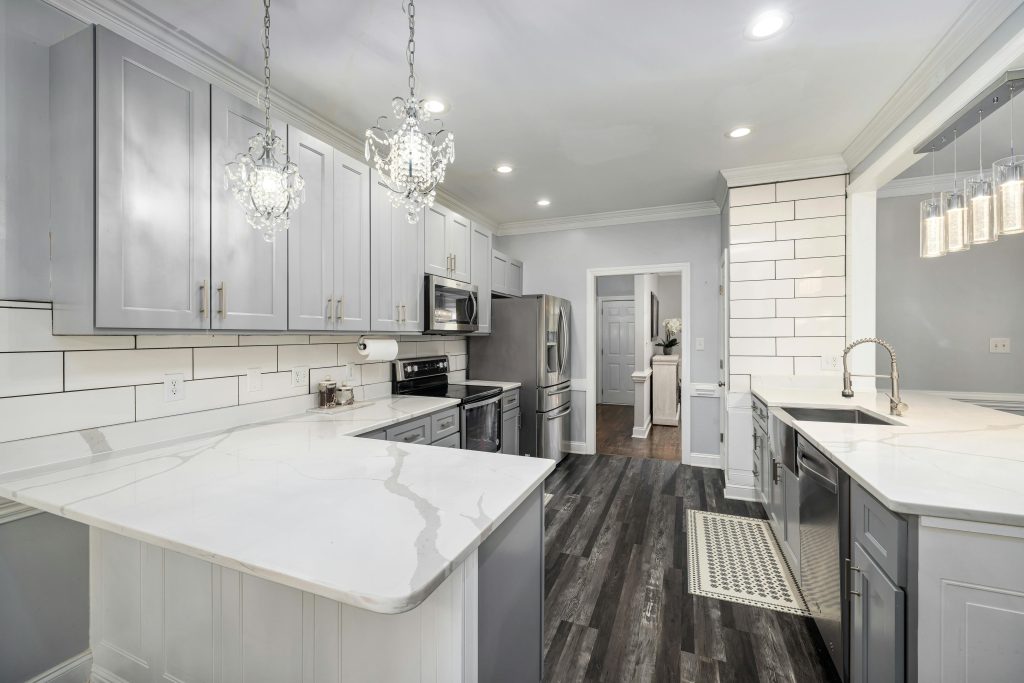
As sustainability becomes an ever-growing concern in home design, understanding how the materials we choose impact the environment is crucial. In this article, we’ll dive into the hidden environmental effects of quartz countertops, what makes them less sustainable than other options, and how homeowners can make more environmentally conscious decisions.
The Basic Composition of Quartz Countertops
Quartz countertops are engineered surfaces, made by combining natural quartz crystals with resins, polymers, and pigments. While the base mineral, quartz, is abundant in nature, the resin used to bind the quartz together is synthetic and petrochemical-based. This key detail plays a significant role in the environmental footprint of quartz kitchen countertops in Saluda, SC. At Anderson Granite & Marble Shop of Greenwood, we often explain to clients that quartz countertops are made up of about 90% to 95% natural quartz. However, that remaining 5% to 10% is composed of synthetic materials that help create a smooth, durable surface. These resins and binders are derived from petroleum products, which are non-renewable and often involve energy-intensive manufacturing processes. So while quartz is largely made from natural stone, it also includes significant synthetic components that contribute to the overall environmental impact.
The Carbon Footprint of Quartz Production
One of the primary concerns with quartz kitchen countertops in Saluda, SC is the carbon footprint of their production process. The process of making engineered quartz surfaces involves a substantial amount of energy. The manufacturing plants require electricity to combine the natural quartz with synthetic resins, and large-scale production also generates a significant amount of greenhouse gases.
The extraction of raw quartz also has environmental implications. Mining for quartz crystals can disturb ecosystems, and while quartz is abundant, large-scale mining operations still contribute to habitat destruction and pollution. At Anderson Granite & Marble Shop of Greenwood, we encourage homeowners to consider these factors when choosing countertops. While the stone itself is naturally sourced, the process of creating quartz countertops involves industrial production that contributes to environmental impact, particularly in terms of energy consumption and greenhouse gas emissions.
Waste and Chemical Concerns in Quartz Manufacturing
Beyond the carbon footprint, there are additional environmental concerns related to the waste produced during quartz countertop manufacturing. The process of shaping and finishing quartz countertops generates a significant amount of scrap material, which may end up in landfills if not properly managed.
Furthermore, the resins and chemicals used in manufacturing quartz countertops can emit volatile organic compounds (VOCs). These compounds can contribute to air pollution and poor indoor air quality. In some cases, countertops can release VOCs after installation, though this effect typically diminishes over time.

Still, the chemicals involved in quartz manufacturing are a concern for environmentally conscious consumers. At Anderson Granite & Marble Shop of Greenwood, we discuss how these chemical components can be minimized through better manufacturing practices. We also inform clients that some manufacturers have started using low-VOC resins to create more eco-friendly products. However, these options are still relatively limited compared to more sustainable alternatives.
Comparing Quartz to Other Materials: Granite and Marble
When it comes to environmental impact, quartz is not the only stone countertop option to consider. Granite and marble have their own ecological footprints, and for some homeowners, these materials might offer a more sustainable choice. Unlike quartz, granite countertops are made from 100% natural stone and typically involve less synthetic material in the production process. While mining granite still has environmental consequences, particularly in terms of energy usage and transportation, it doesn’t rely on the petrochemical resins that quartz countertops do. Furthermore, granite surfaces are durable and can last a lifetime, meaning they don’t need to be replaced as frequently.
Marble, while also a natural stone, can be more delicate than granite and may require more care. However, it also doesn’t include synthetic resins or polymers, which makes it a more environmentally friendly option in terms of production. For homeowners exploring quartz kitchen countertops in Saluda, SC, understanding the trade-offs between materials is essential. Each stone has its pros and cons, and the decision ultimately depends on what factors, such as durability, cost, and sustainability, are most important to the homeowner.
Quartz and Sustainability: The Industry Response
As sustainability becomes an increasing focus for consumers, manufacturers are taking steps to improve the environmental impact of quartz countertops. Many companies are now producing quartz surfaces with recycled materials, such as post-consumer glass, mirrors, or even other stone scraps. These materials are ground up and added to the quartz mixture, reducing the need for new raw materials and diverting waste from landfills. Some manufacturers are also working to reduce the carbon footprint of their production processes. This includes using renewable energy sources in their plants and improving the efficiency of manufacturing methods to lower emissions.
At Anderson Granite & Marble Shop of Greenwood, we are pleased to offer clients options that are more environmentally friendly. While quartz still faces environmental challenges, the growing trend towards sustainability in the industry shows promise. For homeowners in Saluda, SC, there are now eco-conscious options available that align with a more sustainable lifestyle.
How to Minimize the Environmental Impact of Your Quartz Countertops
If you’ve already selected quartz for your kitchen countertops in Saluda, SC, don’t worry, there are steps you can take to minimize the environmental impact of your choice. The key lies in careful selection, installation, and maintenance. First, consider opting for quartz surfaces made from recycled materials. These countertops are made from a combination of recycled glass, stone, and other materials, helping to reduce the demand for new raw materials and reducing waste.
Second, consider the longevity of your investment. Quartz kitchen countertops, like those offered at Anderson Granite & Marble Shop of Greenwood, are incredibly durable and long-lasting. By choosing a material that can withstand heavy use, you are reducing the frequency with which you need to replace your countertops, which in turn reduces waste. Lastly, be mindful of how you care for your countertops. Quartz surfaces require very little maintenance, but keeping them clean and well-maintained ensures their longevity. By avoiding harsh chemicals and using eco-friendly cleaners, you can reduce the impact of your cleaning routine on the environment.
The Bottom Line: Making an Informed Decision
When you choose quartz kitchen countertops in Saluda, SC, you are making a decision based on style, function, and practicality. However, it’s important to also consider the environmental impact of your choice. While quartz offers numerous benefits, including low maintenance and durability, it’s important to be aware of its carbon footprint, chemical content, and the sustainability of the manufacturing process. We believe in providing our clients with the information they need to make an informed decision. While we do offer quartz countertops, we also encourage homeowners to consider all options, including natural stone like granite and marble, which can have a lower environmental impact in certain circumstances.
Whether you choose quartz, granite, or marble, we are here to help you make a decision that fits your style, budget, and environmental values. As more manufacturers embrace sustainable practices, the options for eco-conscious countertops will continue to grow. By choosing carefully, you can enjoy a beautiful, functional kitchen without compromising on the environment. In the end, your choice of quartz kitchen countertops in Saluda, SC isn’t just about what looks best today, it’s about making a decision that aligns with your lifestyle, values, and long-term goals.