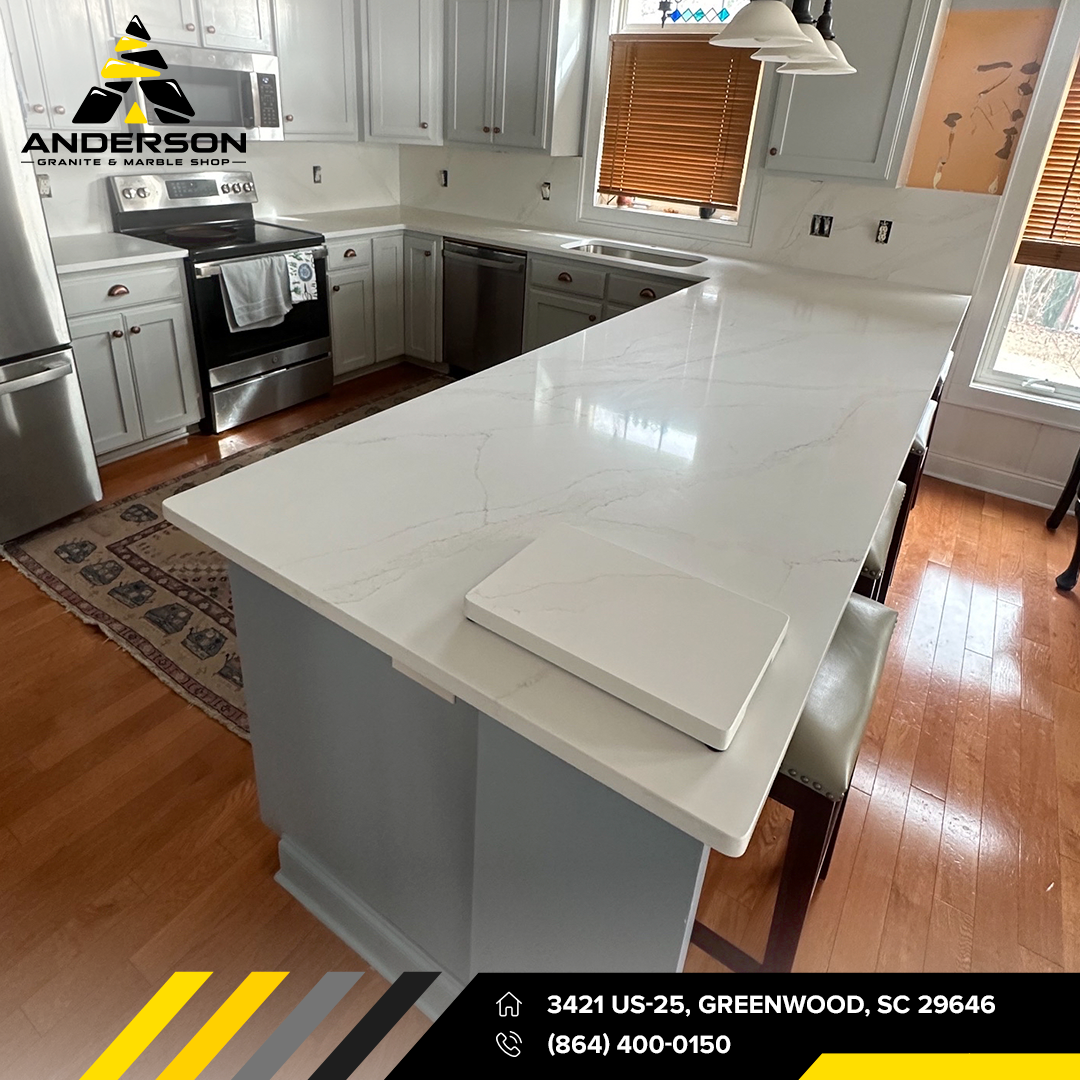
Quartz countertops are often marketed as worry-free. Durable. Consistent. Easy to live with. For many homeowners, that promise is exactly what makes quartz appealing in the first place. Yet once the kitchen is in daily use, the questions begin. Can a hot pan go down for just a second? Is it safe to chop directly on the surface? Why do some quartz tops seem fine for years while others show damage quickly?
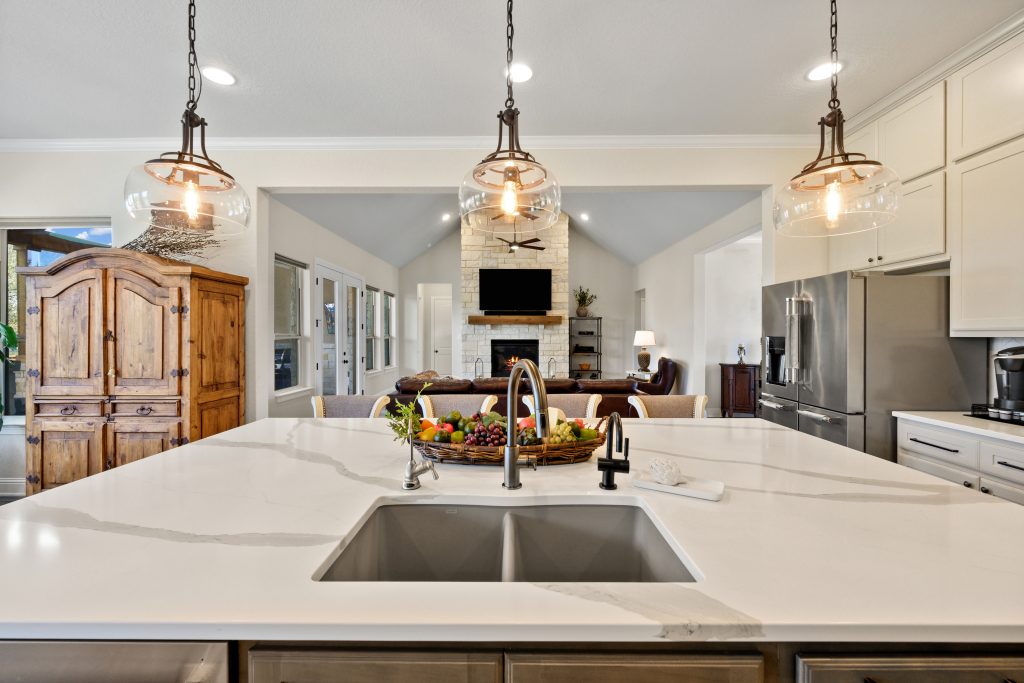
We hear these concerns often from homeowners researching countertops in Honea Path, SC, especially those who cook frequently and do not want to feel restricted in their own kitchens. The truth about quartz is not complicated, but it is often oversimplified. Understanding how quartz behaves under heat and sharp contact makes the difference between long-term satisfaction and quiet frustration.
Why quartz feels indestructible at first
Quartz surfaces look strong because they are uniform. Unlike natural stone, quartz does not have visible fissures, mineral clusters, or dramatic variation. That visual consistency signals reliability to the brain. People assume that if it looks engineered, it must be engineered to handle everything. That assumption is where most misunderstandings begin. Quartz is durable, but it is not invincible. Its strength comes from a combination of crushed natural stone and binding resins. Those resins are what give quartz its smoothness and color control, but they also define its limits.
Heat is not the same as warmth
Quartz tolerates warmth very well. Everyday kitchen temperatures are not a problem. Plates from the dishwasher, warm serving dishes, and ambient heat from cooking do not damage the surface. Direct heat is a different story. A pan fresh from the stove or oven can exceed the temperature threshold of the resins that hold quartz together. When that happens, the damage is not always immediate or dramatic. Sometimes it appears later as dull spots, discoloration, or subtle texture changes. Homeowners choosing countertops in Honea Path, SC often assume that because quartz feels solid, heat will not matter. In reality, heat management is the single most important habit for quartz longevity.
Why damage does not always look like damage
One of the most confusing aspects of quartz heat exposure is how quietly it can show up. There is rarely cracking. Instead, the surface may lose its sheen or develop a faint shadow that cannot be cleaned away. This leads many people to believe the surface is dirty or improperly sealed. In truth, the resin has been stressed. Once that happens, no amount of cleaning restores the original finish. At Anderson Granite & Marble Shop of Greenwood, we often explain that quartz damage tends to be cosmetic but permanent. Knowing this ahead of time prevents unnecessary disappointment.
Knives and quartz: a different kind of risk
Quartz is harder than steel in terms of surface resistance, but that does not mean it welcomes knives. Cutting directly on quartz will not usually gouge the surface immediately. Instead, it dulls blades quickly and can leave faint metal marks. These marks are often mistaken for scratches. In many cases, they are transferable residue rather than actual damage. Still, repeated cutting in the same area increases wear and changes how the surface reflects light. For homeowners exploring countertops in Honea Path, SC, this distinction matters. Quartz resists scratching, but it does not function as a cutting board.
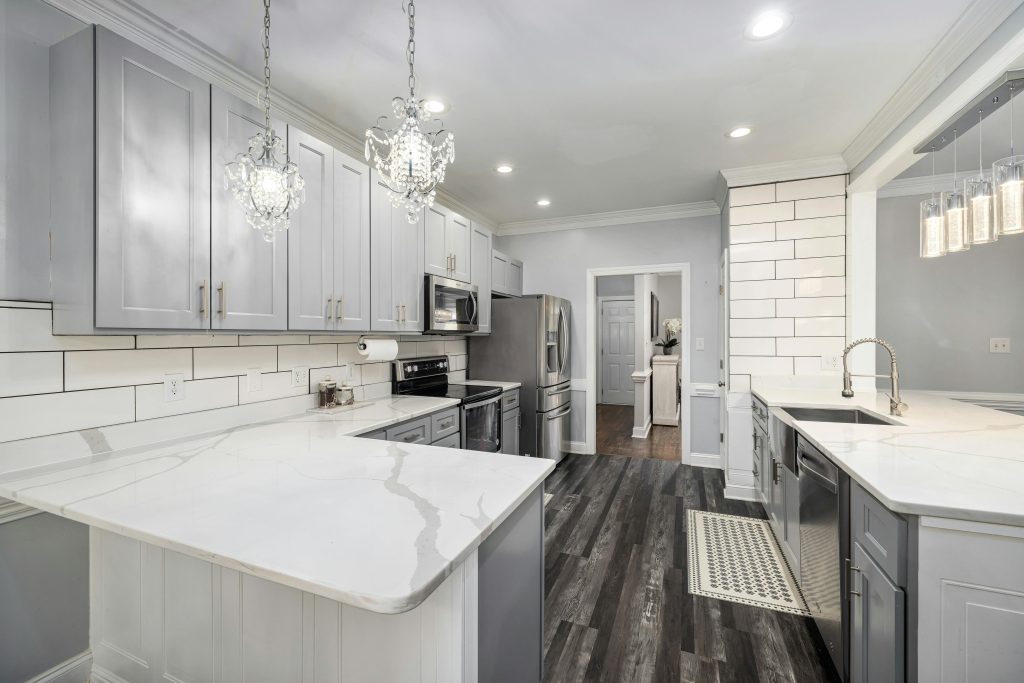
Why quartz feels tougher than it is
Quartz resists stains extremely well. It does not absorb liquids the way natural stone can. This strength leads people to trust it with other forms of abuse. Heat and knives exploit different weaknesses than staining does. Stain resistance comes from non-porosity. Heat resistance depends on resin tolerance. Knife resistance depends on surface hardness and friction. Understanding these differences helps homeowners use quartz confidently instead of cautiously.
Daily habits that protect quartz naturally
Most quartz damage does not come from accidents. It comes from habits. Resting hot cookware directly on the surface. Sliding heavy items repeatedly in the same area. Cutting without a board out of convenience. The good news is that these habits are easy to adjust. Trivets, cutting boards, and brief pauses become second nature quickly. We see this adjustment happen often when installing countertops in Honea Path, SC for households that cook daily.
The psychological side of countertop fear
Fear often grows from uncertainty. When homeowners do not know what a surface can handle, they become overly cautious or overly careless. Quartz benefits from clarity. Once people understand its real limits, they relax. They cook normally. They clean without stress. They stop hovering. That emotional comfort is just as important as physical durability.
How cooking style affects quartz satisfaction
Quartz performs best in kitchens where cooking is active but organized. People who prep ingredients thoughtfully and plate food with intention tend to love quartz. Those who cook impulsively, move fast, and rely on placing hot items wherever there is space may feel restricted. This does not mean quartz is wrong for those kitchens. It simply means expectations must match reality when choosing countertops in Honea Path, SC.
Comparing quartz to natural stone
Granite and quartzite tolerate heat better because they do not rely on resin. Marble reacts differently but also does not melt under heat. Quartz trades some heat tolerance for consistency and stain resistance. This trade-off works beautifully for many homeowners. At Anderson Granite & Marble Shop of Greenwood, we help clients weigh these trade-offs honestly rather than selling one material as universally superior.
Why manufacturers include heat warnings
Heat warnings are not legal overkill. They are reflections of material science. Quartz manufacturers know exactly how their products behave under stress. Ignoring these guidelines does not always cause immediate damage, but repeated exposure compounds risk. Homeowners researching countertops in Honea Path, SC benefit from understanding that guidelines exist to preserve appearance, not to limit enjoyment.
What knife marks really mean
Most visible knife marks on quartz are not scratches. They are metal transfer from the blade. These marks often clean off with proper products. True scratches are rare, but they can occur with aggressive cutting over time. Cutting boards protect both the surface and the knives themselves. Quartz rewards small protective habits with long-term consistency.
Cleaning myths that make damage worse
Some homeowners respond to dull spots or marks by scrubbing harder or using abrasive cleaners. This often worsens the appearance. Quartz finishes are engineered. Abrasion changes how light reflects, making damage more visible. Proper cleaning restores clarity only when the surface itself is intact. Once heat damage occurs, aggressive cleaning does not help.
Long-term performance depends on expectations
Quartz that meets expectations performs beautifully for decades. Quartz that is expected to behave like granite under heat will eventually disappoint. This expectation gap is one of the most common issues we address when consulting on countertops in Honea Path, SC projects.
Real kitchens, real results
Working from Greenwood, SC and serving Honea Path, SC, Anderson Granite & Marble Shop of Greenwood sees quartz surfaces years after installation. Kitchens that respect heat boundaries look nearly new. Those that do not show wear quickly. This contrast is not about quality. It is about use.
Why quartz still makes sense for many homes
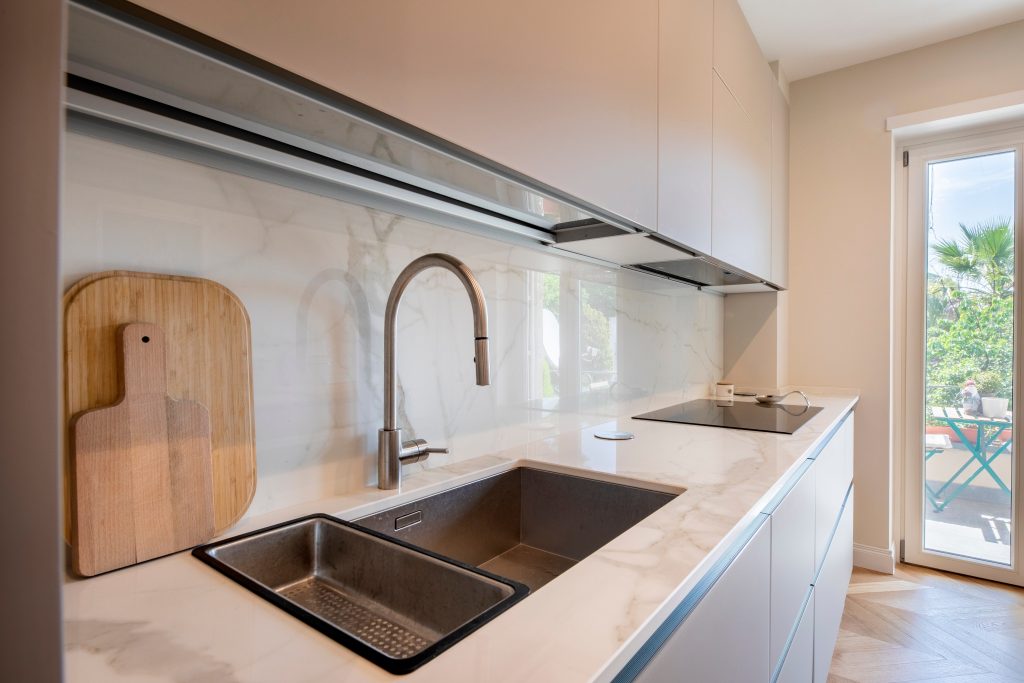
Despite its limits, quartz remains one of the most popular countertop choices. Its consistency, low porosity, and design flexibility are unmatched. For homeowners who value predictable appearance and minimal staining, quartz delivers exactly what it promises. When paired with realistic habits, quartz excels in busy kitchens.
Choosing quartz with confidence
Confidence comes from understanding. Knowing when to use a trivet. Knowing when to grab a cutting board. Knowing what damage looks like and what it does not. These insights help homeowners enjoy their kitchens instead of policing them. At Anderson Granite & Marble Shop of Greenwood, this education is part of every project, whether the client is renovating a single kitchen or an entire home.
Heat tolerance is not binary
Quartz does not fail at a single temperature. It degrades gradually with repeated exposure. This nuance matters. Occasional warmth rarely causes issues. Repeated direct heat does. Homeowners choosing countertops in Honea Path, SC often find comfort in understanding that moderation matters more than perfection.
The role of installation quality
Proper installation supports quartz performance. Level surfaces, proper support, and correct edge treatment reduce stress points. While installation cannot change heat tolerance, it can prevent other forms of damage that get mistaken for heat issues. This is why experience matters when selecting a provider.
Guidance rooted in experience
Anderson Granite & Marble Shop of Greenwood has worked with quartz in real kitchens long enough to see patterns clearly. From Greenwood, SC, serving Honea Path, SC, we guide homeowners toward choices that align with how they actually live. Quartz works best when it is understood, not idealized.
Can quartz handle heat and knives? Yes, within reason. Quartz is strong, reliable, and forgiving when used as intended. It is not designed for direct heat or cutting, but it thrives with simple protective habits. For homeowners considering countertops in Honea Path, SC, quartz offers beauty and consistency without demanding constant care. With realistic expectations and thoughtful use, it becomes a surface that supports daily life instead of complicating it. That balance is what we aim to deliver at Anderson Granite & Marble Shop of Greenwood, every single time.