
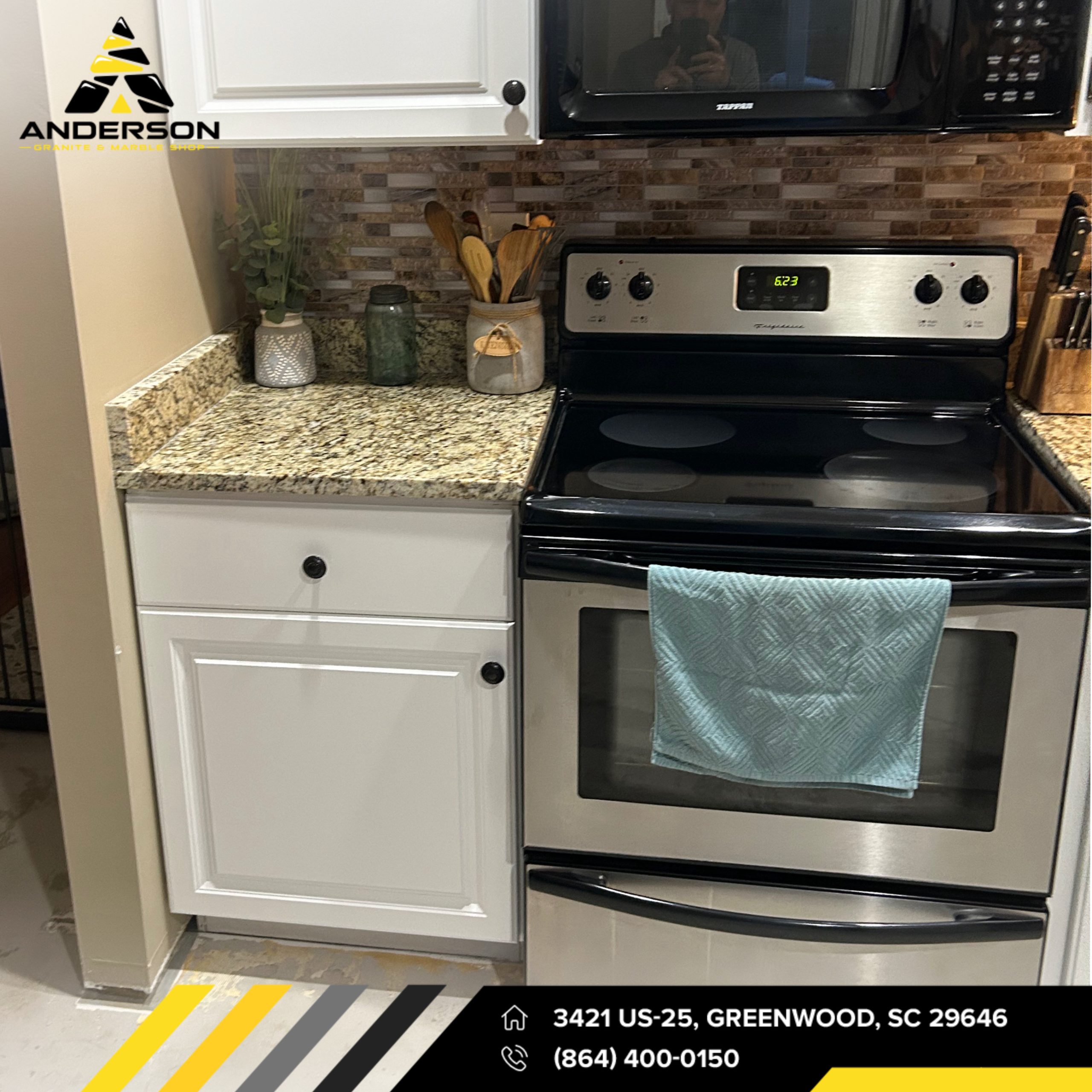
Your countertop appears to change color during the day because light changes constantly. Morning daylight, direct afternoon sun, shadows, cabinet reflections, and artificial lighting can make the same slab look warmer, cooler, darker, brighter, or more strongly patterned within a few hours.
The stone itself usually has not changed. What changes is the type, direction, intensity, and color temperature of the light reaching its surface.
We explain this often to homeowners comparing granite stores in Hartwell, GA because a slab selected under warehouse lighting may look noticeably different once it is installed beside cabinets, flooring, windows, and under-cabinet lights.
At Anderson Granite & Marble Shop of Greenwood, we encourage homeowners to evaluate countertop samples under several lighting conditions before approving a material.
Why Does a Countertop Look Different in the Morning and Evening?
A countertop looks different throughout the day because natural light changes in both direction and color temperature.
Morning light often feels softer and cooler, especially in rooms that do not receive direct eastern sunlight. As the sun rises, the surface may become brighter and reveal more gray, blue, or white mineral details.
Afternoon sunlight is often stronger and warmer. Cream, beige, brown, gold, and red tones may become more visible, while cooler gray areas appear less dominant.
By evening, artificial lights take over. Warm bulbs may make a neutral white countertop look creamy, while cool bulbs can make the same surface appear bluer or flatter.
| Time of day | Typical light quality | Possible countertop effect |
|---|---|---|
| Early morning | Soft and often cool | Gray and blue tones become stronger |
| Midday | Bright and neutral | Pattern and true contrast become clearer |
| Late afternoon | Warm and directional | Cream, gold, and brown tones intensify |
| Evening | Depends on light bulbs | Surface may look warmer, cooler, or darker |
This daily shift is normal. It is especially noticeable in stone with multiple undertones.
Does Window Direction Affect Countertop Color?
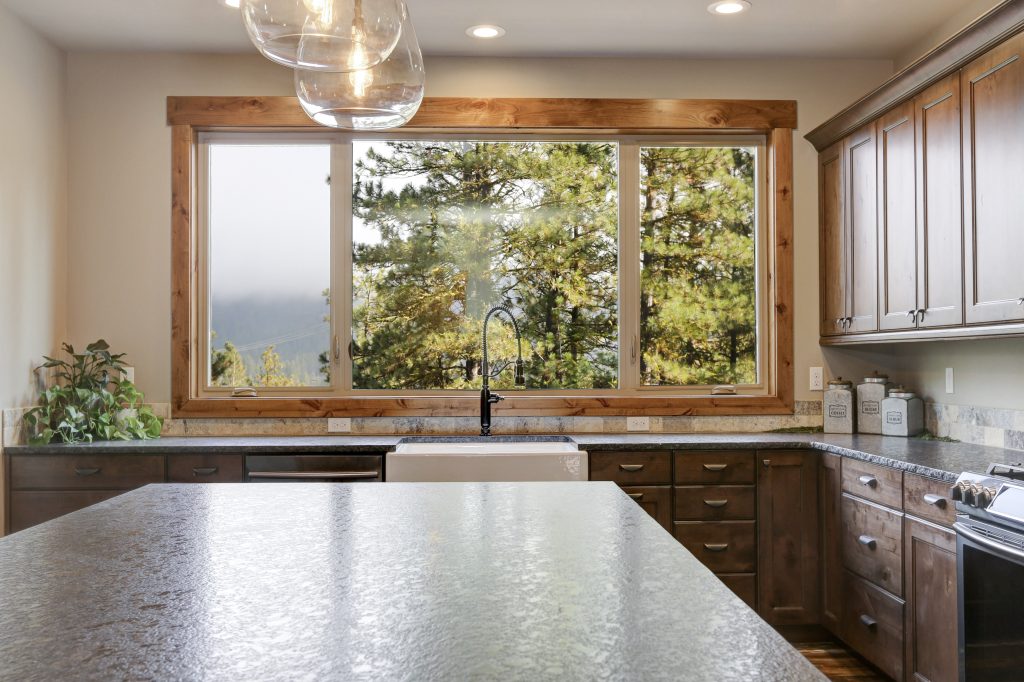
Yes, window direction strongly affects how a countertop looks during different parts of the day.
East-facing kitchens receive stronger morning light. West-facing kitchens often become warmer and brighter in the late afternoon.
South-facing rooms generally receive more daylight throughout the day, while north-facing rooms often have softer, cooler, and more consistent light.
A warm granite installed in a north-facing kitchen may appear grayer than it did in the showroom. A cool white quartz surface in a west-facing room may develop a creamier appearance during sunset.
When homeowners visit granite stores in Hartwell, GA, they should consider which direction their main kitchen windows face before making a final selection.
Why Does the Same Slab Look Different in a Showroom?
The same slab looks different in a showroom because commercial lighting rarely matches residential lighting.
Stone warehouses often use bright overhead fixtures positioned far above the slab. The material may also be displayed vertically, while countertops are installed horizontally.
Orientation matters. A vertical slab receives light directly across its face, but a horizontal countertop reflects ceilings, cabinets, windows, and light fixtures.
Showrooms may also use cooler bulbs to make stone appear crisp and bright. A home may use warmer 2700K or 3000K lighting, changing the stone’s undertones.
At Anderson Granite & Marble Shop of Greenwood, we recommend taking a representative sample home when possible and reviewing it beside the actual cabinets, flooring, and wall color.
What Is Color Temperature, and Why Does It Matter?
Color temperature describes whether artificial light appears warm, neutral, or cool, and it can significantly change countertop color.
Light temperature is measured in kelvins. Lower numbers produce warmer, more yellow light, while higher numbers produce cooler, bluer light.
| Light temperature | Typical appearance | Effect on stone |
|---|---|---|
| 2700K | Warm yellow-white | Strengthens cream, beige, and gold |
| 3000K | Warm-neutral | Balances warm and cool tones |
| 3500K | Neutral white | Shows many colors more evenly |
| 4000K | Cool-neutral | Strengthens gray and white |
| 5000K | Daylight-like blue-white | Can make warm stone look cooler |
A warm white granite under 2700K lighting may look creamy. Under 4000K lighting, it may appear sharper and grayer.
Lighting should be selected with the countertop, not treated as a separate decision made after installation.
Can Cabinet Color Change How the Countertop Looks?
Yes, cabinet color can visually influence nearby stone through reflection and contrast.
White cabinets reflect light onto the countertop and can make the surface look brighter. Dark cabinets absorb more light and may make the countertop appear richer or more contrasted.
Warm wood cabinets can bring out brown, gold, cream, or red minerals. Cool gray cabinets may emphasize blue or charcoal movement.
This effect is especially strong on polished countertops because the finish reflects more of the surrounding room.
For homeowners comparing granite stores in Hartwell, GA, bringing an actual cabinet door to the slab appointment is much more reliable than using a phone photograph.
Does Flooring Affect Countertop Undertones?
Yes, flooring can make a countertop undertone appear stronger even when the two materials are several feet apart.
Warm oak flooring may make a neutral countertop look cooler by comparison. Gray tile may make beige stone appear more yellow.
The countertop, cabinets, floor, backsplash, and wall color are viewed together. The eye constantly compares them, which changes how each individual material is perceived.
A slab that looked perfectly neutral on its own may suddenly appear pink, green, blue, or yellow when placed beside another fixed finish.
At Anderson Granite & Marble Shop of Greenwood, we prefer evaluating all major samples together rather than approving each material separately.
Do Polished and Honed Finishes React Differently to Light?
Yes, polished surfaces reflect more light, while honed and leathered finishes absorb and scatter it.
Polished granite, marble, and quartzite can appear brighter and more saturated. Direct light may deepen dark minerals and make crystal details sparkle.
Honed finishes have less reflection. Their colors may appear softer, flatter, or slightly lighter, depending on the material.
Leathered granite creates small highlights and shadows across the texture. This can make the slab appear more dimensional as daylight moves across the room.
| Finish | Light behavior | Typical visual effect |
|---|---|---|
| Polished | Strong reflection | Deeper color and more contrast |
| Honed | Diffused reflection | Softer, calmer appearance |
| Leathered | Small highlights and shadows | Stronger texture and depth |
| Matte quartz | Limited glare | Muted, modern appearance |
A finish should be viewed under the lighting planned for the actual kitchen.
Why Do Granite Minerals Change Appearance So Much?
Granite appears to change because its individual minerals reflect and absorb light differently.
Granite can contain quartz, feldspar, mica, and other minerals. Some crystals reflect light sharply, while others remain dark or matte.
A silver mineral may look bright under direct sunlight and nearly disappear under warm evening light. Gold or brown areas may become stronger near wood cabinetry.
This natural complexity is one reason granite rarely looks completely flat. The surface reveals different details depending on where the viewer stands and how light reaches it.
Does Quartz Change Color During the Day Too?
Yes, quartz can appear different throughout the day even though its pattern is engineered.
The resin, pigments, background color, and printed or integrated veins all respond to changing light. Bright white quartz may look cooler in daylight and creamier under warm bulbs.
Glossy quartz reflects surrounding cabinets and windows. Matte quartz absorbs more light and may look darker in the evening.
Because quartz patterns are more controlled than natural stone, the change may be less complex. However, undertone shifts can still be significant, especially with white, greige, taupe, and gray products.
How Do Granite, Quartz, Marble, and Quartzite Compare Under Changing Light?
Natural stone usually shows more variation because its minerals and veining are irregular, while quartz changes in a more predictable way.
| Material | Daylight variation | Reflection | Main visual change |
|---|---|---|---|
| Granite | High | Depends on finish | Minerals and color clusters shift |
| Quartz | Moderate | Often consistent | Background undertone changes |
| Marble | High | Strong when polished | Veining and warmth become more visible |
| Quartzite | High | Strong when polished | Crystals and movement gain depth |
Marble may look soft and creamy in warm light but sharper in cool daylight. Quartzite can reveal crystalline depth that is nearly invisible under flat illumination.
When selecting material from granite stores in Hartwell, GA, homeowners should compare more than one surface type if changing light is a major concern.
Can Under-Cabinet Lighting Make a Countertop Look Wrong?
Yes, under-cabinet lighting can expose an undertone mismatch or create uneven color across the countertop.
LED strips sit close to the surface, so their color temperature has a strong effect. If ceiling lights are 3000K and under-cabinet lights are 5000K, the same countertop may look like two different colors.
Spacing also matters. Visible individual LEDs can create bright dots on polished surfaces. Continuous diffused lighting produces a more even result.
The safest approach is to use matching or closely coordinated color temperatures throughout the kitchen.
Why Does the Island Look Different From the Perimeter?
The island often looks different because it receives light from more directions and reflects different surrounding surfaces.
Perimeter countertops sit beneath upper cabinets and may remain in shadow. An island is open to windows, pendants, ceiling lights, and adjoining rooms.
Even when the same material is used, the island may appear brighter, warmer, or more patterned. The vein direction may also affect how light moves across it.
This does not necessarily indicate a product mismatch. It may simply be a result of placement and orientation.
Can Moisture or Sealer Make Stone Look Darker?
Yes, moisture and some sealers can temporarily or permanently deepen the appearance of natural stone.
Unsealed or poorly sealed stone may darken when water absorbs near sinks and faucets. The color often returns to normal as the moisture evaporates, but repeated exposure can create persistent areas.
Enhancing sealers intentionally deepen color and movement. Standard penetrating sealers are usually designed to create less visible change, although results vary.
A sample test should be completed before applying any sealer across an entire slab.
How Can Homeowners Test Countertop Color Before Ordering?
The best method is to view a sample in the actual kitchen for at least one full day.
Place the sample horizontally, not upright. Move it between the island, sink, range, and perimeter areas.
Review it:
- In early morning daylight
- At midday
- During late afternoon sun
- Under pendant lights
- Under cabinet lighting
- Beside cabinets and flooring
- Next to the planned backsplash
- With all lights turned off
A sample cannot show the full pattern of a large slab, but it can reveal undertones and lighting conflicts.
What If the Countertop Looks Wrong After Installation?
First, identify whether the problem comes from lighting, surrounding colors, finish, residue, or the material itself.
Changing bulb temperature may solve a countertop that appears too yellow or blue. A backsplash or wall color adjustment can also change how the surface is perceived.
If the stone looks cloudy, it may have cleaning residue, hard-water film, or uneven sealer. Natural stone can sometimes be professionally cleaned, polished, honed, or resealed.
Replacement should be considered only after simpler causes have been evaluated.
How Much Do Different Countertop Materials Cost?
Installed countertop materials usually range from about $45 to $200 or more per square foot.
| Material | Typical installed range |
|---|---|
| Granite | $45–$120+ per sq. ft. |
| Quartz | $55–$140+ per sq. ft. |
| Marble | $70–$180+ per sq. ft. |
| Quartzite | $80–$200+ per sq. ft. |
At Anderson Granite & Marble Shop of Greenwood, we prepare estimates after reviewing the material, square footage, finish, cutouts, edge profile, seams, backsplash, and installation access.
Lighting does not typically change fabrication cost, but discovering an undertone conflict after installation can create avoidable repainting, fixture changes, or material replacement.
What Is Included in Professional Fabrication and Installation?
Professional service includes precise measuring, slab planning, cutting, edge fabrication, cutouts, seam preparation, delivery, and installation.
A complete project may include:
- Material and finish consultation
- Digital templating
- Slab layout review
- Sink and cooktop cutouts
- Edge fabrication
- Seam planning
- Delivery and installation
- Sealing when needed
- Care instructions
During layout planning, we consider which slab areas will appear on the island, perimeter, and backsplash. This helps place the strongest movement where the room’s lighting can show it effectively.
How Long Does Countertop Installation Take?
Most projects take approximately 10–14 business days from final templating to installation.
| Project stage | Typical timing |
|---|---|
| Material selection | 1–5 days |
| Digital templating | One appointment |
| Slab layout review | 1–2 days if needed |
| Fabrication | 5–10 business days |
| Installation | Usually one day |
| Plumbing reconnection | Same day or next day |
Before templating materials selected through granite stores in Hartwell, GA, cabinets should be installed, level, secured, and ready to support the stone. Sink and appliance details should also be final.
What Selection Mistakes Should Homeowners Avoid?
The biggest mistakes are choosing under one light source, relying on phone photographs, and ignoring surrounding undertones.
Avoid:
- Selecting from a small sample alone
- Viewing the slab only vertically
- Ignoring window direction
- Mixing several bulb temperatures
- Choosing cabinets and countertops separately
- Trusting showroom lighting as the final appearance
- Forgetting the flooring and backsplash
- Assuming “white,” “gray,” or “beige” describes one exact color
A countertop does not exist alone. Its apparent color is created by the entire room.
FAQ
Does a countertop physically change color during the day?
Usually no. Changing light and surrounding reflections make the existing colors appear different.
Which light temperature is best for countertops?
Around 3000K often provides a balanced warm-white appearance, but the best choice depends on the stone and cabinetry.
Why does my white countertop look yellow at night?
Warm artificial lighting can strengthen cream and yellow undertones that are less visible in daylight.
Do polished countertops change more under light?
They often appear to change more because they reflect windows, fixtures, cabinets, and surrounding colors.
Can cabinet color affect the countertop?
Yes. Cabinet color changes contrast and can reflect warm or cool tones onto the surface.
Should a sample be viewed at home?
Yes. It should be viewed horizontally in the actual room during several times of day.
Can lighting be changed after countertop installation?
Yes. Changing bulb temperature or improving under-cabinet lighting may correct an unwanted color effect.
How long does countertop installation take?
Most projects take about 10–14 business days from final templating to installation.
Choosing Countertops for Changing Light in Hartwell
Address: 3421 US-25 Greenwood, SC 29646
Phone: (864) 400-0150
Our suppliers: Cambria, MSI Surfaces, Daltile, Moda Quartz, Stone Showcase, Silestone (Cosentino House), Caesarstone, Hanstone, Walker Zanger, Spectrum Quartz, Wilsonart, Cosmos Surfaces.
Countertop color is never created by the slab alone. Window direction, daylight, bulb temperature, cabinet reflection, flooring, finish, and surface orientation all influence how the material looks from morning through evening.
Anderson Granite & Marble Shop of Greenwood is based in Greenwood, SC and serves Hartwell, GA and surrounding communities. We provide digital templating, custom fabrication, and professional installation for granite, quartz, marble, and quartzite kitchens, islands, bathrooms, vanities, backsplashes, and custom residential stone surfaces.
For homeowners comparing granite stores in Hartwell, GA, we help evaluate undertones, finishes, slab movement, lighting conditions, pricing, fabrication requirements, and installation timelines before the material is cut.