

Honed marble often looks better in an active kitchen because its soft, low-sheen finish allows etching, light scratches, and everyday wear to blend into the surface more naturally. Polished marble can look spectacular on installation day, but every new dull mark tends to stand out against its reflective finish.
We explain this difference to homeowners considering marble kitchen countertops in Hartwell, GA because the best finish is not simply the one that looks brightest in a showroom. It is the one that still feels right after months of cooking, coffee spills, baking, and family meals.
At Anderson Granite & Marble Shop of Greenwood, we help homeowners choose marble with realistic expectations about appearance, maintenance, and long-term use.
What Is Honed Marble?
Honed marble is marble that has been ground to a smooth, matte or satin finish instead of being polished to a high shine.
The honing process removes strong reflection while preserving the stone’s color, veining, and natural movement. The surface still feels smooth, but it looks softer and less formal.
Honed marble is not rough. It does not have the deep texture of leathered granite. Depending on the stone and final grit, it may look completely matte or retain a gentle satin glow.
This softer finish is one reason marble kitchen countertops in Hartwell, GA can feel comfortable in kitchens designed for daily use rather than display.
Why Does Honed Marble Hide Etching Better?
Honed marble hides etching better because the entire surface already has a low-sheen appearance.
Etching occurs when acidic substances react with the calcium carbonate in marble. Lemon juice, vinegar, wine, tomato sauce, and many cleaning products can create dull spots.
On polished marble, those spots interrupt a reflective finish and become visible under pendant lights or daylight. On honed marble, the difference between the original finish and a new etch is usually less dramatic.
The etch still exists. Honing does not make marble acid-resistant. It simply allows the wear to blend into the overall surface more evenly.
Does Honed Marble Still Stain?
Yes, honed marble can stain if oils, wine, coffee, or colored liquids absorb into the stone.
Honing changes the finish, not the marble’s porosity. In some cases, a honed surface may absorb liquids more readily than a polished one because the finishing process leaves the stone more open.
Proper sealing is therefore important. A penetrating sealer slows absorption and gives homeowners more time to clean spills, but it does not make the surface stain-proof.
| Substance | Main risk | Best response |
|---|---|---|
| Olive oil | Dark absorbed stain | Wipe immediately |
| Red wine | Etching and discoloration | Blot and clean promptly |
| Coffee | Possible brown stain | Clean the same day |
| Lemon juice | Fast etching | Rinse immediately |
| Tomato sauce | Etching and possible staining | Remove promptly |
| Butter or grease | Darkening | Use trays and wipe spills |
At Anderson Granite & Marble Shop of Greenwood, we recommend checking the sealer regularly rather than assuming one application will protect the stone forever.
How Often Should Honed Marble Be Sealed?
Many active kitchens should have the marble checked every 6–12 months and resealed when the stone begins absorbing water quickly.
There is no perfect schedule for every slab. Dense marble may go longer between applications, while more porous material may need attention sooner.
A simple water test can help. Place a small amount of water on the countertop for 10–15 minutes. If the marble darkens, the sealer may need to be renewed.
Sealing reduces staining risk. It does not prevent etching, scratches, chips, or damage from harsh cleaning products.
Is Honed Marble Easier to Maintain Than Polished Marble?
Honed marble is often easier emotionally, but not necessarily easier technically.
Both finishes require stone-safe cleaning, prompt spill removal, cutting boards, and periodic sealing. Honed marble may even show oils or fingerprints more clearly on certain dark colors.
The practical advantage is that ordinary wear tends to look less isolated. Homeowners are less likely to feel that one lemon mark has ruined a perfect reflective surface.
| Feature | Honed marble | Polished marble |
|---|---|---|
| Shine | Low or satin | High |
| Etch visibility | Lower | Higher |
| Oil visibility | Can be noticeable | Usually less noticeable |
| Scratch visibility | Often softer | May catch reflected light |
| Color depth | Softer | Deeper and more saturated |
| Overall mood | Relaxed and lived-in | Formal and crisp |
For homeowners selecting marble kitchen countertops in Hartwell, GA, the decision often comes down to whether they prefer a relaxed patina or a more formal appearance.
Does Honed Marble Look Dull or Unfinished?
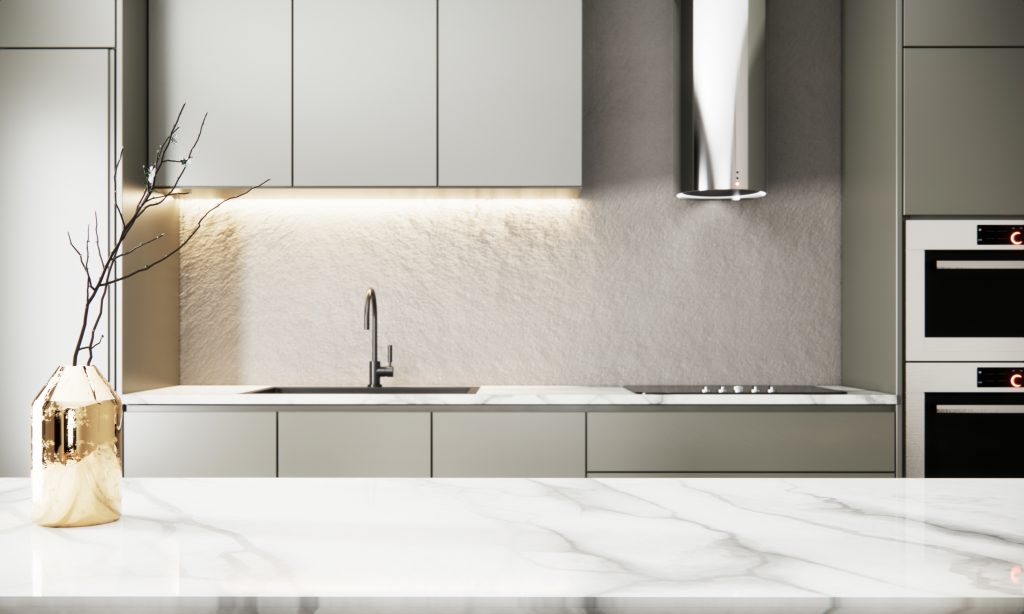
No, properly honed marble looks intentional, soft, and architectural rather than unfinished.
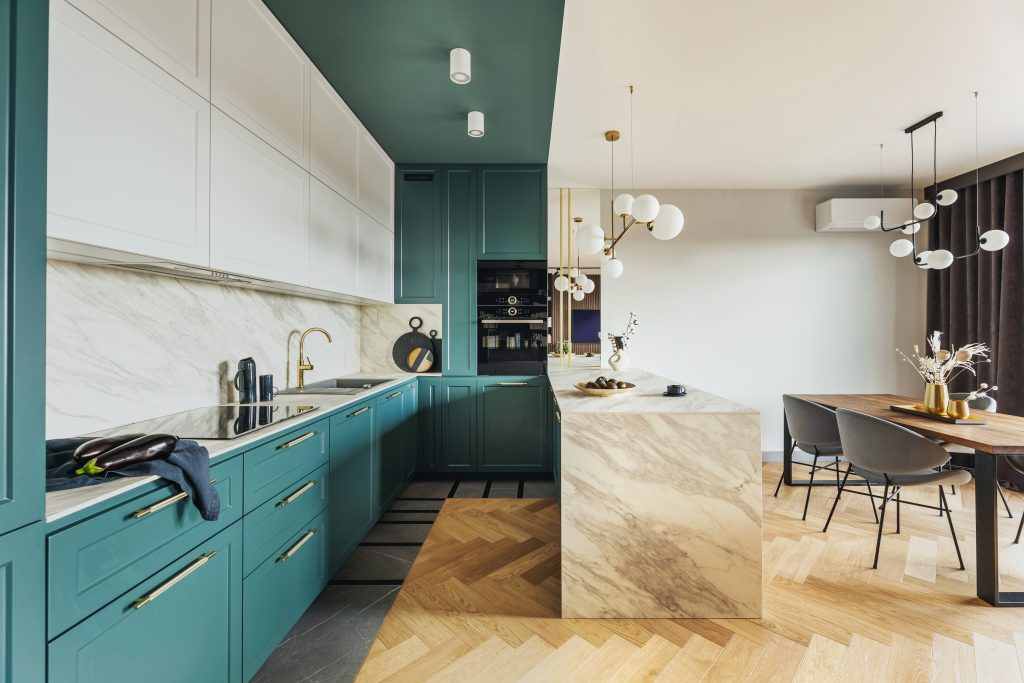
The finish works especially well with natural wood cabinets, warm white paint, handmade tile, aged brass, bronze, and low-sheen flooring. It reduces glare and allows the veining to feel part of the room rather than a glossy decorative layer.
A poor honing job can look uneven or cloudy. Professional finishing should create a consistent sheen across the slab, edges, seams, and cutouts.
Lighting also matters. Honed marble absorbs more light than polished marble, so dark stone in a dim kitchen may feel heavier.
Which Marble Colors Look Best Honed?
White, cream, gray, green, black, and richly colored marble can all look beautiful honed, although the result varies by stone.
White marble becomes softer and less formal. Green and burgundy marble often feel more grounded. Black marble can become dramatic without producing mirror-like glare.
Some marble loses part of its color intensity when honed. Polishing deepens contrast, while honing creates a quieter appearance.
Before fabrication, we recommend comparing finish samples of the actual material whenever possible. A polished slab image does not always predict how that stone will look honed.
Is Honed Marble Good for Serious Cooks?
Yes, honed marble can work well for serious cooks who accept patina and use practical protection during food preparation.
Marble remains naturally cool, which is useful for pastry dough, pie crust, chocolate, and baking work. It also handles moderate heat better than engineered quartz, although trivets are still recommended.
Daily cooks should use:
- Cutting boards for chopping and citrus preparation
- Trivets beneath hot pans and appliances
- Trays under oils, coffee equipment, and soap
- Coasters beneath wine and acidic drinks
- pH-neutral stone cleaner
- Soft cloths instead of abrasive pads
The surface will still change. For many homeowners, that gradual wear makes honed marble feel more authentic rather than damaged.
How Does Honed Marble Compare With Granite, Quartz, and Quartzite?
Honed marble offers the softest visual character, while granite, quartz, and quartzite generally provide easier daily performance.
Granite resists scratches, heat, and acid better than marble. Quartz is non-porous and does not need sealing, but it has lower heat tolerance because it contains resin. Quartzite offers strong heat and scratch resistance with natural movement, though it usually costs more.
| Material | Acid resistance | Heat resistance | Stain resistance | Maintenance |
|---|---|---|---|---|
| Honed marble | Low | Good | Moderate when sealed | Higher |
| Granite | Good | Excellent | Very good when sealed | Moderate |
| Quartz | Good | Moderate | Excellent | Low |
| Quartzite | Good to very good | Excellent | Very good when sealed | Moderate |
At Anderson Granite & Marble Shop of Greenwood, we compare materials based on the homeowner’s cooking habits, maintenance tolerance, and attitude toward natural aging.
Can Honed Marble Develop a Beautiful Patina?
Yes, honed marble can develop an even, attractive patina when it is used consistently over time.
Patina includes softened areas, small etches, fine scratches, and changes in sheen. In a heavily used kitchen, these marks can blend together instead of appearing as isolated defects.
The first few marks are often the hardest for homeowners to accept. After months or years, the surface may feel more balanced and less precious.
This is why honed marble often looks at home in older European kitchens, bakeries, restaurants, and historic houses. The stone is allowed to record use.
Can Honed Marble Be Refinished Later?
Yes, honed marble can often be professionally refinished to improve uneven wear, scratches, and widespread etching.
A technician may rehone the surface to create a more consistent finish. Selected stains may respond to poultice treatments, while small chips can sometimes be filled with color-matched resin.
Restoration has limits. Deep stains, structural cracks, or severe edge damage may remain visible. Still, marble’s ability to be refinished is one reason it can remain usable for decades.
How Much Do Honed Marble Countertops Cost?
Honed marble generally costs about $70–$180 or more per square foot installed.
The finish itself may add roughly $10–$30 or more per square foot when the slab is not already honed. Rare material, specialty finishing, dramatic layout, full-height backsplashes, and complex fabrication can increase the price.
| Material | Typical installed range |
|---|---|
| Granite | $45–$120+ per sq. ft. |
| Quartz | $55–$140+ per sq. ft. |
| Marble | $70–$180+ per sq. ft. |
| Quartzite | $80–$200+ per sq. ft. |
At Anderson Granite & Marble Shop of Greenwood, we prepare project-specific estimates after reviewing the slab, dimensions, edge details, cutouts, seams, delivery access, and finish requirements.
For homeowners pricing marble kitchen countertops in Hartwell, GA, the estimate should cover fabrication and installation rather than showing only the raw material rate.
What Affects the Final Price?
Material rarity, square footage, slab yield, finish, cutouts, edges, and installation complexity have the greatest effect on price.
Common cost factors include:
- Marble type and slab availability
- Factory-honed versus custom-honed finish
- Total square footage
- Sink and cooktop cutouts
- Edge profile
- Seam location
- Vein matching
- Waterfall panels
- Full-height backsplashes
- Existing countertop removal
- Delivery and site access
A small kitchen may still need an additional slab if the pattern must run in one direction or if the best sections are reserved for a large island.
What Is Included in Professional Fabrication?
Professional fabrication includes measuring, slab planning, cutting, honing edge details, creating cutouts, preparing seams, and installing the finished pieces.
A typical project may include:
- Material and finish consultation
- Digital templating
- Slab layout review
- Sink and cooktop cutouts
- Edge fabrication
- Seam planning
- Delivery and installation
- Initial sealing when needed
- Care instructions
The finish should remain consistent across the top surface, exposed edges, sink openings, and backsplash pieces. Uneven sheen can become especially visible under kitchen lighting.
How Long Does Fabrication and Installation Take?
Most marble projects take about 10–14 business days from final template to installation.
Specialty honing, complex vein matching, waterfall panels, and full-height backsplashes may extend the schedule.
| Project stage | Typical timing |
|---|---|
| Material selection | 1–5 days |
| Digital templating | One appointment |
| Slab layout review | 1–2 days |
| Fabrication | 5–10 business days |
| Installation | Usually one day |
| Plumbing reconnection | Same day or next day |
Before measuring marble kitchen countertops in Hartwell, GA, cabinets should be installed, level, secured, and ready to support the stone. Sink, faucet, cooktop, and appliance specifications should also be final.
What Cleaning Products Should Be Avoided?
Acidic cleaners, bleach, abrasive powders, and harsh degreasers should be avoided on honed marble.
Vinegar and lemon-based cleaners can etch the surface. Abrasive pads may create uneven areas, while strong chemicals can weaken sealer or discolor the stone.
For daily cleaning, mild dish soap or a pH-neutral stone cleaner is usually enough. The surface should be wiped with a soft cloth and dried around sinks and faucets.
When Is Polished Marble the Better Choice?
Polished marble is better when the homeowner values deeper color, stronger reflection, and a more formal appearance.
It can brighten a darker kitchen and emphasize fine veining. It may also resist oil absorption slightly better because of the tighter polished surface.
The tradeoff is that new etches tend to be more visible. Polished marble works best for homeowners who will either protect it carefully or accept the contrast between shiny and etched areas.
When Should a Homeowner Choose Another Material?
Another material may be better when visible wear, routine sealing, or immediate spill cleanup would cause ongoing frustration.
Granite offers natural character with stronger acid and scratch resistance. Quartz provides the lowest maintenance. Quartzite creates marble-like movement with greater hardness and heat resistance.
Honed marble is not the universal answer. It is the right answer for homeowners who prefer authentic aging to permanent visual perfection.
FAQ
Does honed marble stain more easily than polished marble?
It can absorb liquids more readily, which makes prompt cleaning and proper sealing important.
Does honed marble still etch?
Yes. Honing makes etching less visible but does not prevent the chemical reaction.
How often should honed marble be sealed?
Many active kitchens should check the sealer every 6–12 months.
Is honed marble difficult to clean?
No. Mild soap or a pH-neutral stone cleaner and a soft cloth are usually sufficient.
Can honed marble handle hot pans?
Marble has good heat resistance, but trivets are still recommended to protect the stone and sealer.
Can scratches be removed from honed marble?
Many light scratches can be improved through professional rehoning.
How long does installation take?
Most projects take about 10–14 business days after final templating.
Is honed marble better than quartz?
It offers more natural variation and patina, while quartz requires less maintenance and resists stains better.
Choosing Honed Marble for a Working Kitchen in Hartwell
Address: 3421 US-25 Greenwood, SC 29646
Phone: (864) 400-0150
Our suppliers: Cambria, MSI Surfaces, Daltile, Moda Quartz, Stone Showcase, Silestone (Cosentino House), Caesarstone, Hanstone, Walker Zanger, Spectrum Quartz, Wilsonart, Cosmos Surfaces.
Honed marble often looks better in a kitchen that gets used because it does not depend on a flawless reflective finish. Etches, small scratches, and softened areas can become part of a consistent patina instead of standing out as isolated damage.
Anderson Granite & Marble Shop of Greenwood is based in Greenwood, SC and serves Hartwell, GA and surrounding communities. We provide digital templating, custom fabrication, and professional installation for marble, granite, quartz, and quartzite kitchens, islands, bathrooms, vanities, backsplashes, and other residential stone applications.
For homeowners selecting marble kitchen countertops in Hartwell, GA, we help compare honed and polished finishes, maintenance needs, pricing, slab layout, fabrication details, and installation timelines before the material is cut.